
.jpeg?width=1072&height=1072&name=AdobeStock_712485853%20(1).jpeg)
Our cities are continuing to evolve as a result of rapid urbanisation. Decades of development have seen natural landscapes replaced with tarmac, concrete and hard surfaces, all of which are less permeable and pose problems for drainage. The challenge facing architects, specifiers, and local authorities is clear: how can aging infrastructure be adapted to cope with extreme weather, surface water flooding, and rising temperatures, while creating greener places to live?
The answer is a combination of both traditional grey infrastructures combined with innovative green technology and understanding how the two can work harmoniously together.
Aging Drainage Systems and the Rising Risk of Urban Flooding
Many UK cities rely on drainage systems which were built decades ago, long before the realities of today’s climate challenges. These systems are ill-equipped to manage the heavier rainfall and longer dry spells we see today. According to a report from the National Infrastructure Commission, 600,000 homes and businesses are at risk from future flooding if nothing is done to improve drainage over the next 30 years.
Another challenge is the urban heat island (UHI) effect, where concrete-heavy cityscapes trap heat, resulting in higher localised temperatures compared to the surrounding areas. Not only can this increase in temperature damage infrastructure, placing strain on local authorities, but it can also be damaging to the health and wellbeing of residents.
Addressing these challenges begins with changing our approach to how we see water, recognising it as a precious resource to be managed, not something to be disposed of.
Why green infrastructure matters
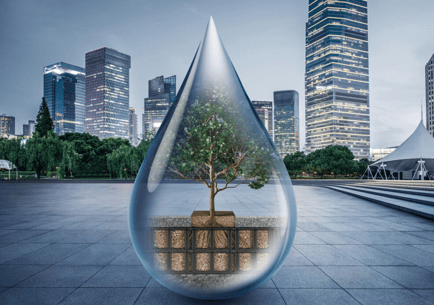
Green solutions help to reassess how we manage water in our cities. From rain gardens to bioswales, these nature-based solutions not only absorb and filter rainwater but also help cool urban areas, improve air quality, and support biodiversity.
However, these solutions alone are not enough and need support by integrating with grey infrastructure. Sustainable drainage systems (SuDS) including attenuation tanks, smart roofs, and tree tanks work alongside green solutions to help manage water flow; filtering, storing, managing, and reusing to adapt to sudden weather events and longer-term climatic changes.
Combining grey and green for climate resilience
As climate challenges increase, the question isn’t grey or green, but how can they be combined to increase resilience.
Green solutions can slow water at the surface to reduce the immediate burden on drainage systems, while grey infrastructure can manage the control and flow to protect existing systems. Combining the two helps to create a circular, more resilient system, with grey elements used to feed green technologies.
Supporting water management with Wavin
At Wavin, we take a holistic view of water management and how we can support climate‑resilient cities. By “following the drop” from roof level through to underground systems – our solutions are designed to capture, store and manage rainwater at every stage of its journey.
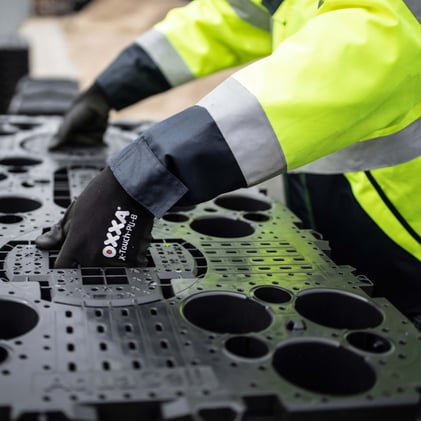
From rooftop rainwater harvesting systems to underground attenuation solutions such as Aquacell NG, we help maximise the contribution that both grey and green infrastructure can make towards protecting communities, managing surface water and safeguarding precious water resources.
