
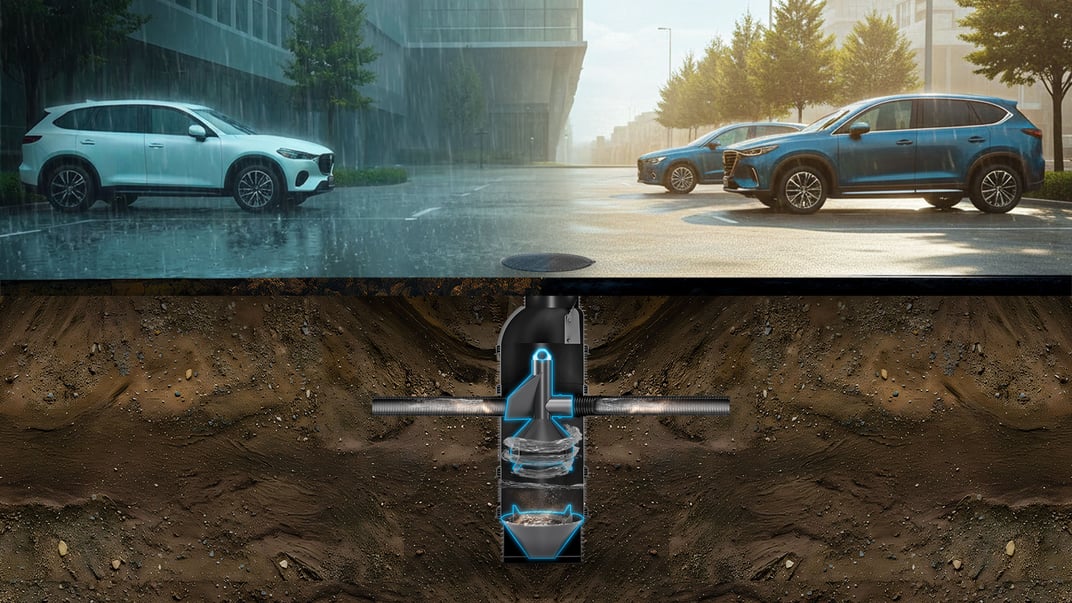
Urban drainage systems are under pressure like never before. With more extreme weather, expanding cities and tighter environmental regulations, local authorities and decision-makers need stormwater infrastructure to do more than simply channel water away.
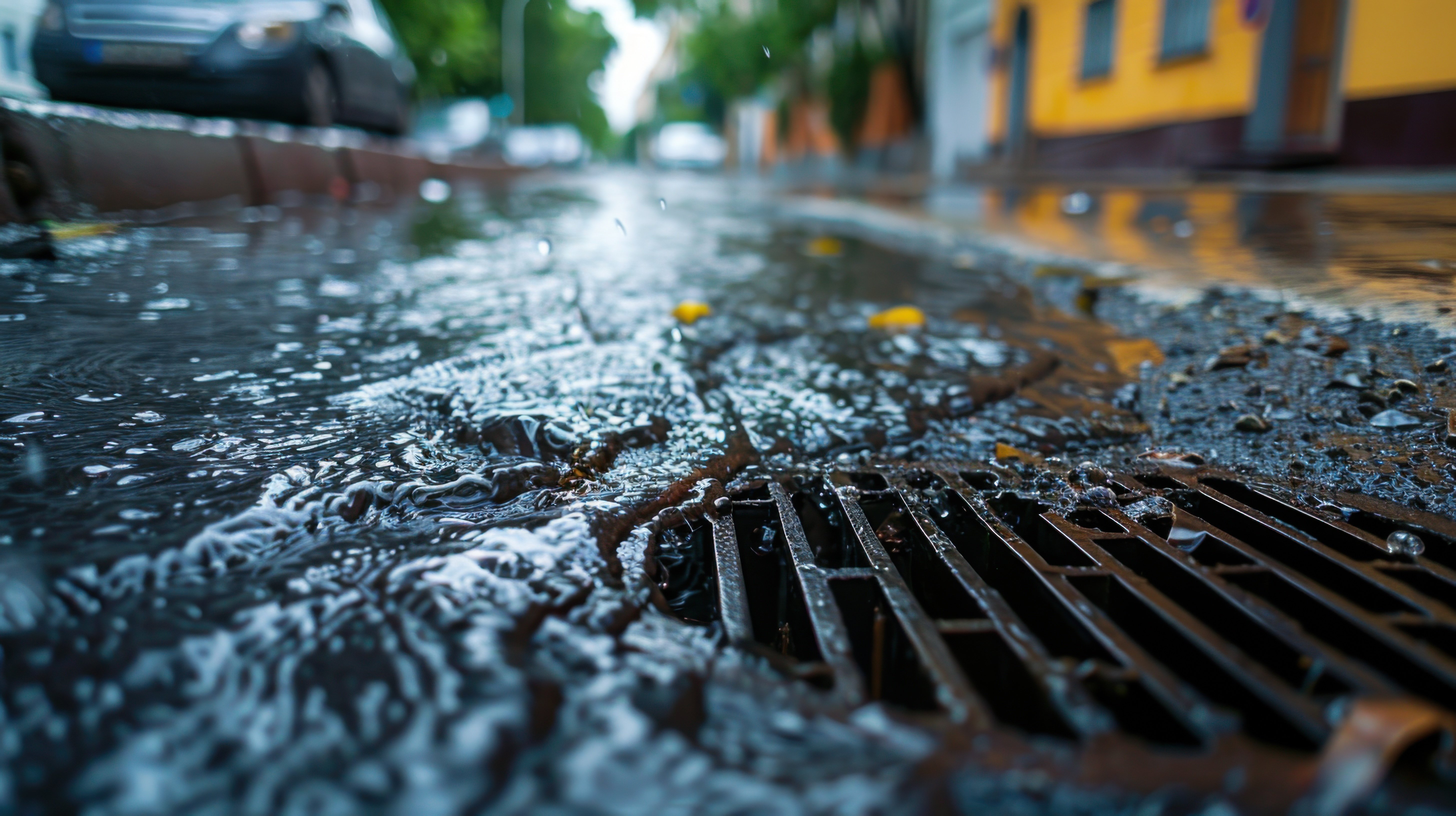
Rainfall may start pure, but the moment it lands in urban areas, it collects contaminants from all kinds of surfaces – from roads to roofs, walkways and industrial spaces. The resulting runoff carries a complex mix of harmful pollutants, many of which bind to fine sediment particles. Traditional sediment traps are often challenging to install in urban environments, where limited space and difficult maintenance make their large size and volume challenging to implement.
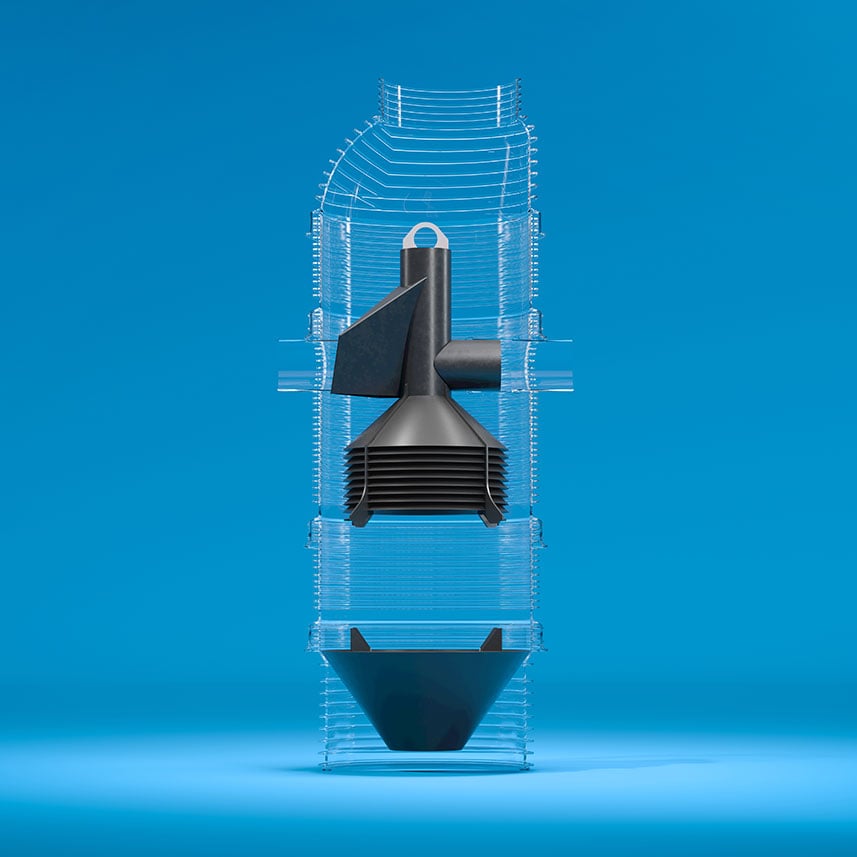
Wavin Certaro Lamella HDS: Hydrodynamic separation meets lamella settling
To address this stormwater challenge, we’ve developed the Wavin Certaro Lamella HDS. Compact yet powerful, this next-generation solution harnesses dual-stage sediment separation to enhance the quantity and quality of sediment capture.
The first stage is hydrodynamic separation. Leveraging this process, as water enters the system, a specially designed flow diverter redirects it into a swirling motion. This change in velocity and direction causes larger particles to drop out of the flow, mimicking the natural sedimentation process within a controlled, space-saving structure.
During the second stage, the partially treated flow then rises through a stack of inclined lamella plates comprised of thin, angled layers that dramatically increase the available surface area for sediment settling. At this point, even particles as small as 63 microns are efficiently removed from the water column and deposited in the system’s sediment retainer.
This innovative technology is designed to operate within catchment areas of up to 6,000 m², removing up to 80% of total suspended solids from surface water runoff, providing a measurable level of treatment within a single compact chamber.

Three standout benefits
Thanks to clever engineering, this dual-technology approach delivers three clear advantages:
1. High efficiency in real-world conditions
This solution is specifically engineered for real-world rainfall patterns. It performs at its best during frequent low-to-mid-intensity rain events, the kind that washes most sediment from surfaces. Optional bypass configurations (available at 20 or 40 l/s) can divert extreme flows to protect against overload or resuspension.
This means the system maintains its high annual efficiency, even with occasional storm surges, and helps protect the upstream drainage system from hydraulic overload and associated flood risk.
2. Compact footprint
Housed in a Tegra DN1000 manhole, the Certaro Lamella HDS is ideal for dense urban environments where underground space is limited and difficult to excavate. Thanks to a flexible riser system that allows the unit to be configured for installation depths between 1.1m and 3.1m, it's also highly adaptable and easily incorporated into retrofitting projects and new developments.
Even the sludge sump volume is configurable—from 320 litres up to 1,120 litres using riser shafts—allowing you to balance performance with available space and desired maintenance intervals.
3. Easy maintenance
Traditional sedimentation systems can be time-consuming and expensive to maintain. In contrast, Certaro Lamella HDS is designed to be cleaned like a Tegra road gully. Access is via a central plug, so there’s no need for specialist tools or entering a confined space. All collected sludge flows into a central conical sump, which can be vacuumed out quickly and efficiently.
Initial inspection is recommended after approximately 6 months post-commissioning to calibrate the cleaning interval based on each system’s real-world sediment load. From there, systems typically only require annual inspections, which helps keep operating costs low. For major maintenance, the lamella plates can be jet-cleaned from the central access shaft without requiring dismantling or disruption.
Proven in the lab, ready for the street
The Certaro Lamella HDS has been independently tested under German DWA-A 102 guidelines using artificial fine sediment to simulate typical urban runoff conditions. This rigorous testing confirms its high efficiency across a wide range of particle sizes and flow intensities.
The system treats runoff from areas of 2,000 m² or more, delivering reliable results without compromising sediment capture or flow regulation. And because much of the pollution in urban runoff is sediment-bound—including heavy metals, hydrocarbons, nutrients and microplastics, including tyre wear particles—removing sediment also means removing risk.
Whether in the city or the suburbs, Wavin Certaro Lamella HDS ticks all the boxes, delivering valuable environmental outcomes and practical performance. It’s a compact, easy-to-maintain and adaptable solution that supports cleaner water, healthier ecosystems and more climate-resilient communities.
Explore how this efficient system can simplify your runoff treatment strategy and deliver high performance: wavin.co.uk/certarolamella
