
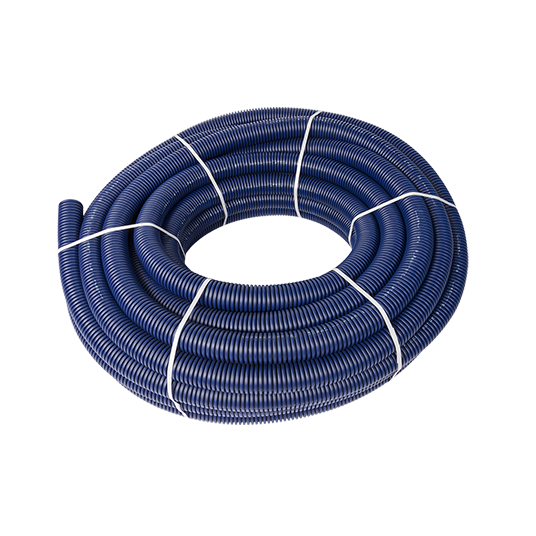
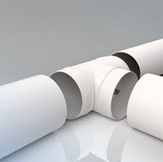
Wavin Semi-Rigid Ducting Rigid Ducting
Ease of Installation
Semi-rigid ducting is more flexible and easier to work with than rigid ducting. Its ability to bend and adapt to different layouts makes it ideal for complex installations in UK new build homes with tight or awkward spaces. Unlike rigid ducting, semi-rigid systems reduce the need for multiple joints during directional changes including connectors, or adapters, thereby simplifying the installation process and saving time.
Space Efficiency
Rigid ducting requires more space and precise alignment, which can be challenging in areas like lofts, ceiling voids, or walls where space is constrained. Semi-rigid ducting is designed to be low-profile and flexible, making it perfect for the limited space often found in UK properties, especially in renovations or Passive House projects and can be threaded through wall spaces and ceiling voids with ease.
Airflow Performance
Semi-rigid ducting offers smoother internal surfaces and gradual bends compared to rigid systems that might have imperfect joints and 90 degree connections and T Junctions creating resistance. Fewer connections mean reduced turbulence and less potential for pressure drops, helping to maintain optimal airflow performance in Mechanical Ventilation with Heat Recovery (MVHR) systems or Central Extract (CMEV) systems.
Durability and Longevity
Semi-rigid ducting is often made of robust materials that resist wear and tear over time. Unlike rigid ducting, which may be prone to warping (flat duct), degrading silicone joint seals or other damage, semi-rigid ducting maintains its integrity even when installed in areas with slight movement or temperature fluctuations.
Fewer Leakage Points
Rigid ducting systems often require multiple joints, which can increase the likelihood of air leakage if improperly sealed. Semi-rigid ducting comes in long, continuous lengths, minimizing the number of joints and creating a more airtight system. This enhances the overall efficiency of the ventilation system.
Compliance with UK Building Regulations
Semi-rigid ducting systems are designed to meet and exceed UK building regulations for ventilation, ensuring optimal performance in airtight and energy-efficient buildings. For example, they are often compatible with Passive House standards, making them a preferred choice for energy-conscious house builders and homeowners.
Cost and Maintenance
While the component cost of semi-rigid ducting may be slightly higher than rigid ducting, the savings in terms of reduced installation time, energy efficiency, and minimal maintenance make this the more cost effective choice. With fewer joints and less susceptibility to leaks or damage, semi-rigid ducting systems require less frequent maintenance.
Noise Reduction
Semi-rigid ducting tends to transmit less vibration and noise compared to rigid ducting, especially in residential ventilation systems. This makes it a quieter solution, enhancing indoor comfort in homes.
Installation Time Comparison
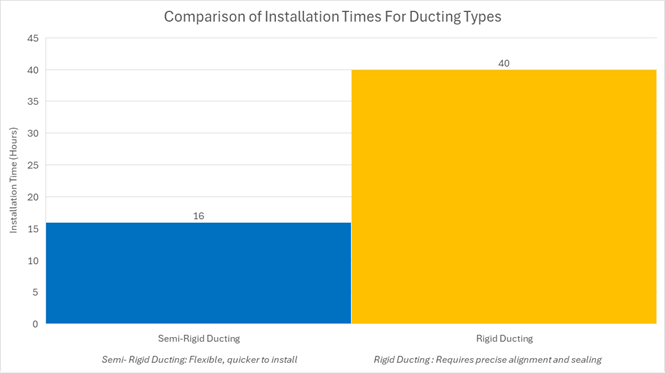
The bar chart below demonstrates the comparative time required to install each type of ducting on a test installation:
- Semi-rigid ducting: Approx. 16 hours (2 days)
- Rigid ducting: Approx. 40 hours (5 days)
Semi-rigid ducting is the popular choice in Europe for ventilation systems due to its flexibility, ease of installation, durability, and performance benefits. It is increasing in popularity now in the UK as it is particularly suitable for modern airtight buildings to support energy-efficient installations. While rigid ducting may still be a good choice for certain straightforward installations, the versatility and long-term advantages of semi-rigid ducting make it the preferred and cost effective option for many applications.
