
%20(1).png?width=1072&height=1072&name=Wavin_K5_image010%20(1)%20(1).png)
The plumbing industry is at a crunch point, with installers under pressure to complete jobs more quickly whilst juggling an ever-growing list of new clients. This makes it essential for them to find new ways of delivering high-quality work at a faster pace.
This is where innovative technology and solutions come into play with air pressure testing become one of those gamechangers, offering a safer, more efficient way of working.
Tight on time
For decades, plumbers have used water to pressure test systems and check for leaks. Whilst this is a tried and tested method, it's not always the most practical or effective option, especially when it comes to being sustainable.
Water is a valuable resource, and plumbers and engineers can use hundreds of litres just to conduct these tests. That water is often wasted and not reused. Transporting water to site also costs installers and construction firms both time and money. From needing to bring wa-ter on site in the first place to conduct the tests, to then needing to drain and dry the system, which is a lengthy process in itself.
The question of health and safety
Time is not the only factor at play. Using water in pressure tests means that pipes must be drained and dried properly to eliminate the risks of leaving stagnant water, which can lead to a build-up of legionella bacteria. It thrives in pipes as the damp and dark conditions allow for the bacteria to grow quickly.
On projects like commercial office developments or high-rise apartment blocks, where build times run into months and even years, this can be a real problem. The plumbing system tends to be one of the first internal jobs to be completed, and damp pipes may be left for weeks before they are flushed through again. This can lead to high levels of contamination and a major health and safety risk. That risk increases further on developments such as schools and hospitals where public health is at play. Air pressure testing removes the risk of stagnant water and bacteria growth by removing the need for water altogether, making it a better option from a health perspective.
Making space for progress
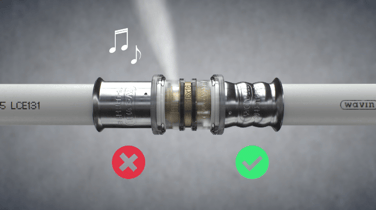 Although water pressure testing is still the most commonly used method, air pressure testing is starting to be seen as a viable alternative as innovative products enter the market. Wavin’s Tigris K5 press fit system is a clear example of this. It gives off a distinctive acoustic alert, or whistle, if there are any unpressed fittings in the system making problems easier and quicker to solve. And it’s impossible to miss, given it rings out at 80 decibels.
Research also shows it saves on average 20 minutes compared to water testing, making it an easy choice for installers who are tight on time.
Looking forward
The innovations in the plumbing industry around air pressure testing have improved exponentially, making it easier and safer to conduct. However, government guidance needs to keep pace as current guidelines state that air pressure testing is less safe than water pressure testing. When done properly, following the manufacturer’s guidance, this isn’t the case and can offer huge benefits to a sector under pressure to deliver at pace.
With demand for plumbers at an all-time high, saving time on the job is no longer a luxury, but a necessity. Using air to pressure test has been proven to save time on site, improve the efficiency of installers and maintain safety standards.
Learn more about the Tigris K5 range here.
