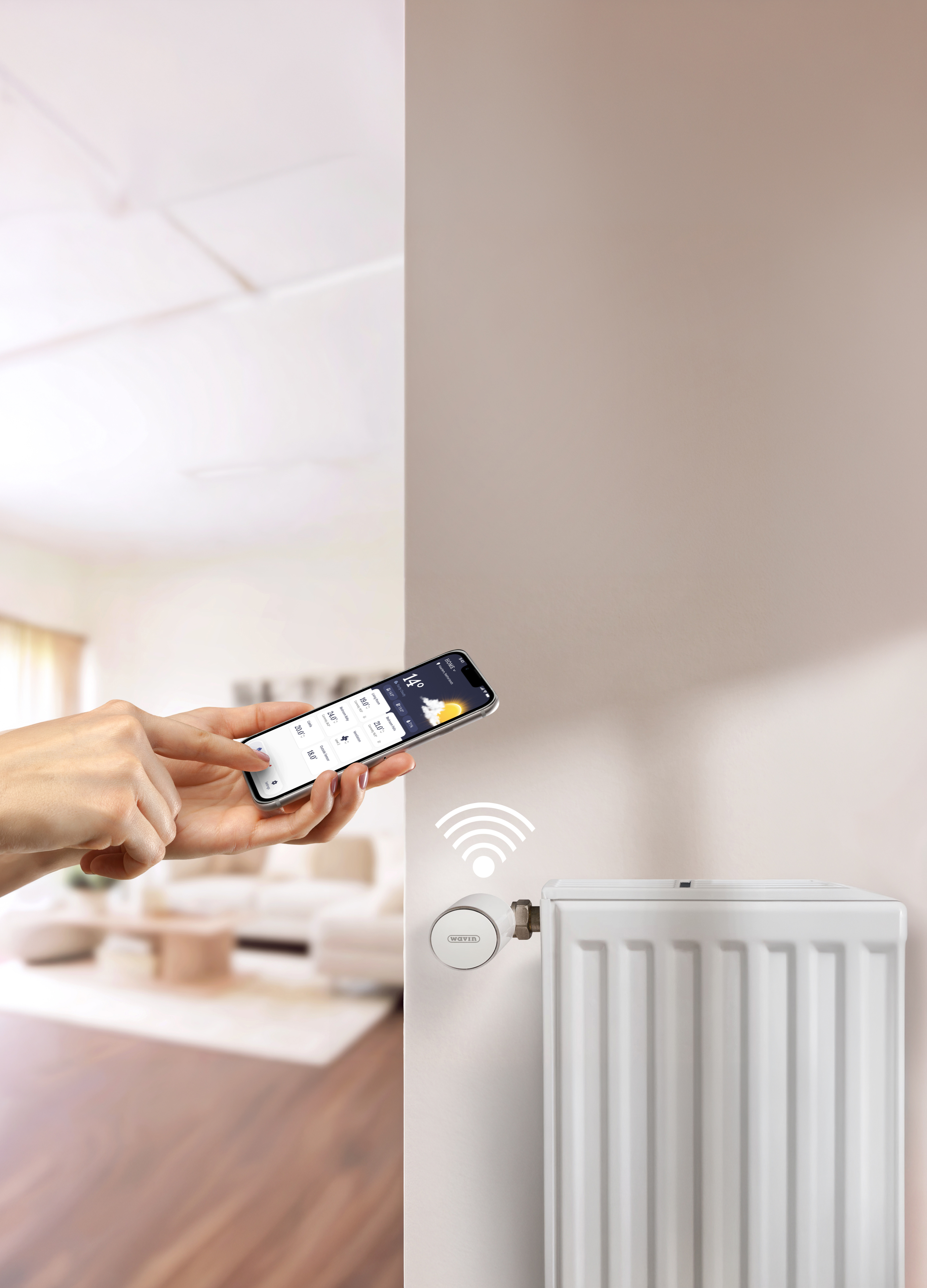
Installers, contractors and designers are under pressure to deliver home climate systems that are quick and easy to install and commission, while guaranteeing comfort and energy efficiency.
Explore how the Sentio Radiator Thermostat can help.
Today’s heating systems are focused on efficiency and flexibility. In response, the role of radiator thermostats is evolving.
Though still widely used, traditional thermostatic radiator valves (TRVs) provide only basic local temperature control and offer limited integration with broader heating strategies. Most importantly, they struggle to meet modern expectations around comfort and make energy saving more difficult.
Electronic radiator thermostats (eTRVs) address these shortcomings by combining fast, accurate temperature measurement, intelligent control algorithms and scheduling, and system-wide communication. They integrate radiators into a coordinated, whole-home heating system rather than treating them as standalone heat emitters.
Part of the Sentio indoor climate platform, Wavin’s Sentio Radiator Thermostat is one of the leading eTRVs on the market today. Sentio is an integrated control ecosystem that coordinates indoor climate technologies through a single control architecture, delivering optimal comfort, convenience and energy savings via an intuitive, easy-to-use app.
For installers and system designers, it’s an opportunity to develop more flexible zoning strategies, improve temperature control and optimise heating performance across a wide range of residential and light-commercial applications. This includes combi systems, where, for example, underfloor heating and radiator heating are combined in one home.

Why electronic radiator control matters
From a technical perspective, the most significant difference between a TRV and an eTRV is how they control temperature. Mechanical TRVs operate on proportional control, in which a temperature-sensitive element expands or contracts in response to local conditions, opening or closing the radiator valve. It’s an approach that reacts slowly to changing conditions and often causes temperature fluctuations and overshoot – hampering comfort and increasing energy bills.
eTRVs use much faster temperature gauges and more advanced control algorithms, typically based on proportional-integral (PI) or proportional-integral-derivative (PID) regulation. These continuously evaluate temperature conditions and make smaller, more precise adjustments to valve position. This means eTRVs respond quickly to maintain a stable temperature, reducing the chance of overshoot.
This improved responsiveness is particularly valuable when dealing with variable heat gains from sunshine, occupancy or appliances. Rather than continuing to deliver heat after a room has reached its target temperature, electronic control can react quickly and reduce unnecessary heat input, maintaining comfort levels and keeping energy costs down.
The wider Sentio ecosystem
The Sentio Radiator Thermostat isn’t just a replacement thermostat head; it’s designed to operate within the wider Sentio control architecture, with the Sentio Control Unit as the central system controller.
Sentio Radiator Thermostats act as motorised actuators that receive commands from the control system and adjust radiator output accordingly. This enables true room-level zoning, where temperatures can be managed independently based on occupancy patterns, room usage and system requirements. Each room in a home can operate on its own temperature schedule and setpoint, and there’s also the ability to group rooms with similar occupancy patterns and temperature requirements.
Because the Sentio Radiator Thermostat forms part of a wider control ecosystem, it also enables radiators to operate alongside other indoor climate technologies, including underfloor heating, heat pumps, heat interface units and mechanical ventilation and dehumidification systems, through the Sentio platform.
Combining radiators and underfloor heating This ability to operate in a connected, hybrid heating ecosystem is a key benefit of the Sentio Radiator Thermostat.
The technologies that make up hybrid systems have fundamentally different operating characteristics. Underfloor heating provides highly efficient, stable background heating but responds relatively slowly to changes in demand. Whereas radiators react much more quickly and can deliver rapid increases in room temperature when required.
Within the Sentio ecosystem, these characteristics can be used together intelligently. Underfloor heating provides the base heating load, maintaining a stable background temperature, while radiators provide faster response and short-term temperature adjustment. This allows designers to combine the efficiency and stability of underfloor heating with the responsiveness of radiators.
Radiator boosting is particularly important as part of a retrofit and renovation strategy. Existing properties often have higher heat losses, inconsistent insulation standards and installation constraints that make it difficult for underfloor heating alone to satisfy peak demand. In these situations, radiators can provide supplementary heating during periods of increased demand or colder weather.
The importance of temperature measurement
Temperature measurement is one of the most overlooked factors affecting heating performance. Traditional radiator thermostats measure temperature at the radiator itself, but if, for example, the radiator is positioned behind curtains or furniture, or exposed to direct sunlight, the temperature reading often won’t accurately reflect the conditions occupants experience.
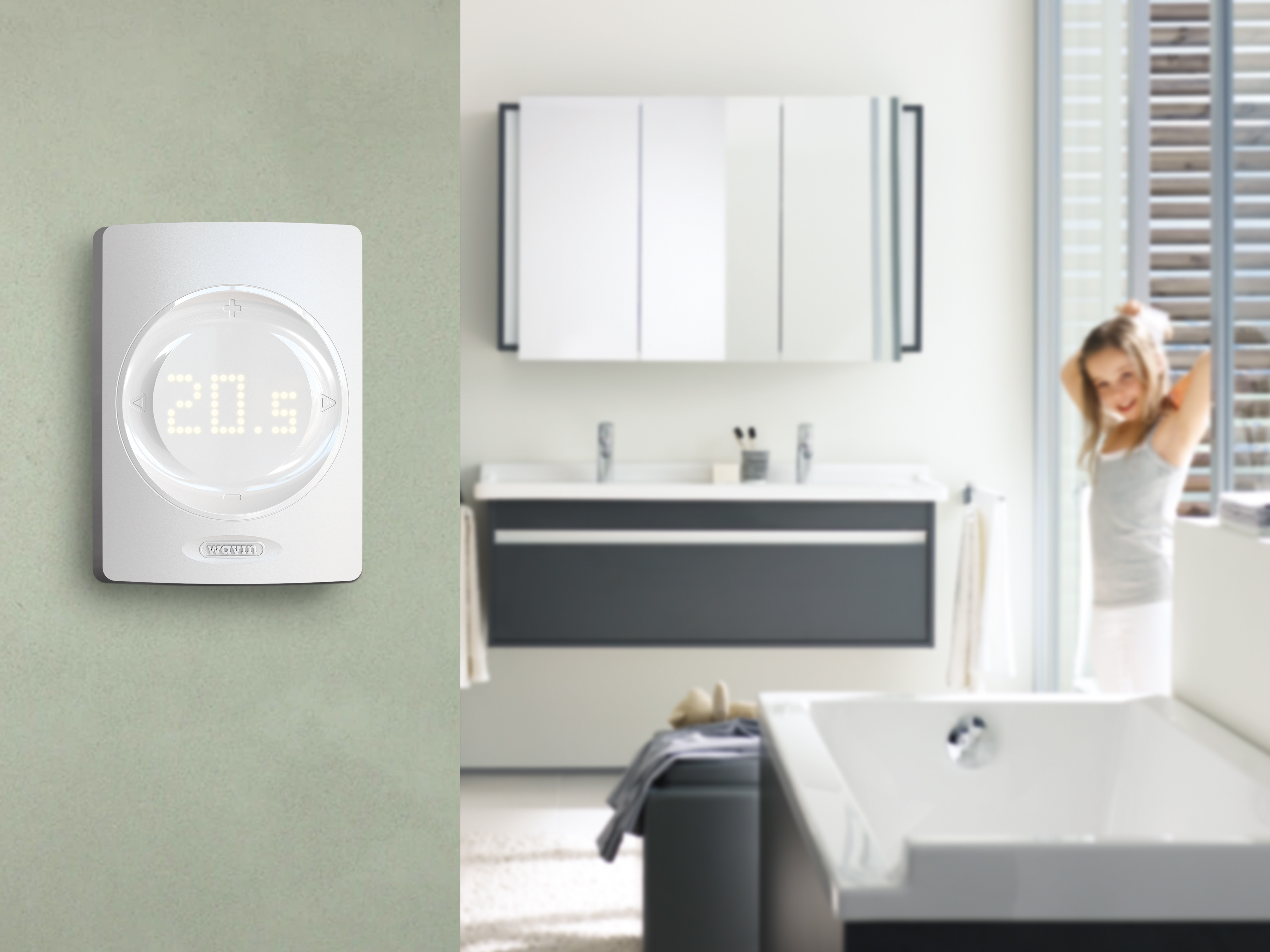
Within the Sentio system, ‘Dependent Mode’ addresses this challenge, as the Sentio Radiator Thermostat adjusts radiator output based on readings from a Sentio room sensor positioned in an area that’s more representative of occupant comfort. By relocating the measuring point, designers can significantly improve control accuracy without altering the system's hydraulic layout.
Multiple radiators as a single zone
In larger spaces with multiple radiators, the Sentio Radiator Thermostat also offers grouped control, in which all radiators respond to a single temperature measurement and operate as a single zone. This approach ensures that all emitters contribute evenly to heating demand rather than competing with one another. It also helps avoid situations in which one radiator carries most of the heating load while the others remain largely inactive.
Applications include open-plan living spaces and large lounges, as well as non-residential spaces such as meeting rooms, hotel suites and larger conference rooms. Beyond comfort benefits, grouped control also contributes to more stable return water temperatures and improved overall system efficiency.
Sentio Radiator Thermostat as a wireless actuator
In applications where traditional wired actuators would normally be connected to a manifold, the Sentio Radiator Thermostat can provide wireless control functionality, reducing the need for additional control cabling. This is particularly helpful in occupied or older properties where cable installation may be difficult, and it gives designers greater flexibility when introducing advanced zoning strategies into existing buildings.
Installation and commissioning considerations
From an installation perspective, the Sentio Radiator Thermostat is simple to install and compatible with a wide range of existing systems. It supports common radiator valve standards via dedicated adapters and can typically be installed without modifications to the hydraulic system.
Once installed, the device automatically calibrates itself to the specific valve geometry, mirroring the pin length and stroke dimension of the radiator. Automatic calibration also allows the thermostat to determine the precise opening and closing positions required for accurate operation, and the system periodically recalibrates to maintain long-term accuracy as components age and operating conditions change.
Installers should pay particular attention to correct room assignments during commissioning, as misassigning thermostats, sensors or zones can lead to unnecessary troubleshooting later. Where multiple radiators are controlled within a single room, grouping should be configured carefully to ensure all emitters operate together and respond to the correct room sensor. Wavin helps with this process through room and zone labelling, making installers' jobs easier.
Reliability and maintenance
A common issue affecting conventional radiator valves is sticking during periods of inactivity. When the system isn’t in use, mineral deposits and scale can restrict valve movement, often resulting in a maintenance call at the beginning of the heating season.
To prevent this, the Sentio Radiator Thermostat performs periodic valve exercise routines where the valve is moved through its operating range to help prevent sticking and maintain reliable operation. Combined with ongoing calibration routines, this helps maintain long-term performance while reducing maintenance requirements.
Thanks to these features, routine maintenance is generally limited to battery replacement, making ongoing ownership relatively straightforward and minimising installer call-backs.

System limits and design considerations
Correct allocation of these circuits is important for overall system behaviour and resident comfort. Particular attention should be given to zone allocation, placement of room sensors and radiators, hydraulic balancing and integration with other climate control systems.
While physical installation is relatively straightforward, successful deployment ultimately depends on correct system design, commissioning and configuration. The greatest benefits are achieved when zoning, sensing, hydraulic performance and control logic are considered together rather than as individual components.
Applications beyond residential buildings
Although primarily associated with residential projects, the Sentio Radiator Thermostat also offers value in commercial environments such as hotels, healthcare facilities, offices and small retail buildings. The ability to reduce temperatures in unoccupied spaces while maintaining comfort where required creates opportunities for significant operational energy savings without compromising user experience.
Plus, zoning flexibility, scheduling and valve exercise routines drastically reduce the manual burden on facilities coordinators.
Looking ahead
As heating systems become increasingly connected and data-driven, intelligent radiator control will play a growing role in overall building performance. Rather than functioning as isolated components, radiators are becoming integrated elements within wider indoor climate systems, capable of responding dynamically to occupancy patterns, heat demand and environmental conditions.
For installers, consultants and specifiers, intelligent radiator control is no longer simply about replacing a thermostat. It’s about improving the way heating systems are designed, controlled and integrated.
Applied correctly, the Sentio Radiator Thermostat supports comfort, convenience and energy efficiency. It’s an easy-to-install solution that delivers significant value for occupiers.
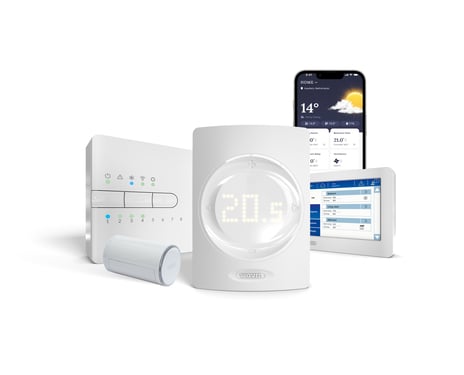
Part of the Sentio indoor climate platform
The Sentio Radiator Thermostat forms part of Wavin's wider Sentio indoor climate platform. Through a single system and app, homeowners can manage radiator heating alongside other indoor climate solutions, including underfloor heating.
This is particularly relevant in homes where different heating technologies are used in different areas of the property. For example, underfloor heating may provide an efficient background temperature on one level of the home, while radiators deliver faster heat response elsewhere.
Bringing these systems together within a single control platform helps create a more coordinated and user-friendly heating experience. And in retrofit properties, the Sentio Radiator Thermostat enables wireless manifold control, making it easier to install manifolds in locations where running new control wiring would be difficult or impractical.
While the benefits of system integration are significant, the value of Sentio Radiator Thermostats starts with the fundamentals: better comfort, greater convenience and more efficient energy use.
For advisors, installers and specifiers, they’re a practical solution that addresses three priorities homeowners care about: comfort, convenience and energy efficiency. As heating systems become increasingly connected, Sentio Radiator Thermostats are proving that smarter control can have just as much impact as the heating technology itself.
